Tag: middle-eastern

  • Egyptian Yellow Lentil Soup

    egyptian yellow lentil soup

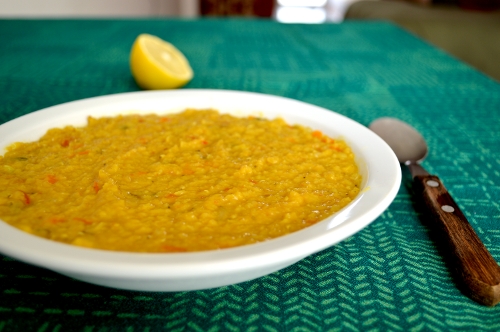
    I stumbled across some yellow lentils (while exploring Buenos Aires’ Barrio Chino (Chinatown), a subject for another post), and as I often cook with the quite similar red lentils, I immediately bought them. Like red lentils (which you can substitute here), yellow lentils cook quickly and fall apart when cooked which makes for hearty soups that taste thick and creamy without the need to add extra fat. Confusingly, yellow split peas are also sometimes referred to as yellow lentils (and look quite similar) even though they’re actually distinct – but they should also work as a substitute here. I decided to make this Egyptian soup with simple flavors to focus on the lentils themselves. I added turmeric to boost the color (and, as a side note, turmeric actually has lots of health benefits as well) and cayenne pepper because I like my food spicy. I’m sadly lacking one of my favorite kitchen tools – my immersion blender – so I couldn’t puree the soup, as I would have liked, but cooking the soup just a few minutes longer so that the lentils fell nearly completely apart worked out just fine for me.
    (more…)

    Related Posts:

  • Colorful Mediterranean Salad with Hummus and Harissa

    colorful mediterranean salad with hummus and harissa

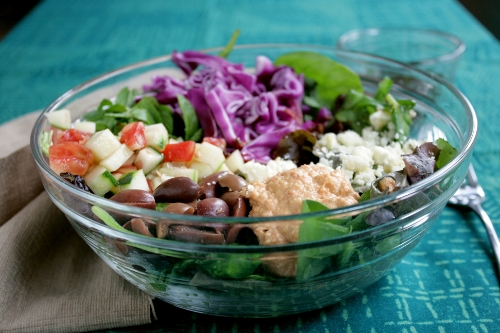
    Recently, I found my stomach rumbling in the middle of the afternoon after having accidentally skipped lunch. I was finishing up an errand and needed food fast, so I stopped by the newly opened location of a local chain that serves Mediterranean food assembly line style. I wanted to eat something healthy (one of my main motivations for cooking) so I ordered a salad. It was amazing – large enough to fill me up (often not the case with salads) and with great variety and flavor. The best part? The inclusion of harissa and hummus as toppings! I’ve been adding them to my salads ever since, and the extra flavor and creaminess they add is unbeatable. It inspired me to later throw together this quick recreation, chock full of healthy and tasty ingredients, including multiple different greens, red cabbage, tomato, and cucumber. Easily customizable with whatever fresh vegetables you might have around (and even better topped with lamb, chicken, or beans), this recipe is definitely worth trying out.

    (more…)

    Related Posts:

  • Harissa

    harissa

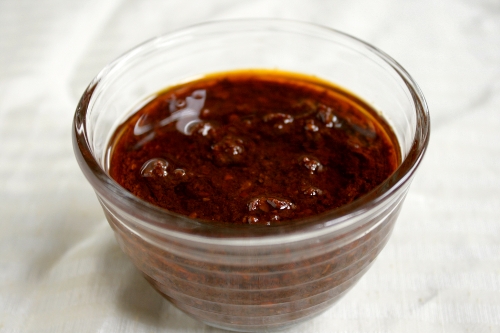
    This recipe for harissa, a Tunisian chile sauce, is seriously spicy. Okay, I’ll admit, my spice tolerance is not quite unbeatable, but it’s pretty high, certainly higher than most people I’ve met. I lap up the spiciest Indian and Thai curries like nobody’s business, toss chili peppers in everything, and liberally sprinkle my food with hot sauce. I’ve never once used gloves when chopping hot peppers. Jalapenos (barely spicy to my palate!), bird’s eye chiles, habaneros, I’ve practically rubbed them all over my hands with no ill effect (okay, the occasional burning eye, admittedly).

    Well, that all changed when chopping up the rehydrated chiles for this particular recipe. Despite washing my hands after doing so, I was soon struck by an intense and slowly worsening burning on the sensitive skin between my fingers – repeated washings, lime juice, and painkillers provided only momentary relief. In the end, I was left to wait for that solver of most problems – time. By the next day, my hands were (mostly) back to normal. But consider yourself warned. The resulting spice paste, however, is amazing. Perfect in small doses as a meat rub, on sandwiches, stirred into soups, or even added to salads. For those less spice inclined, cut back on (or omit) the arbol chiles, and use more guajillos and anchos instead. And I’ll certainly be wearing gloves the next time I make this.

    (more…)

    Related Posts:

  • Roasted Pepper Hummus

    roasted pepper hummus

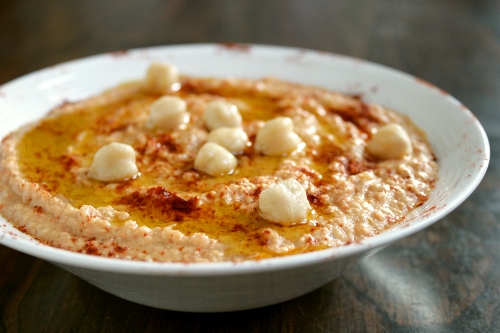
    I’ve long thought that the hummus my dad makes is far superior to any other hummus. For a while though, since my dad is Lebanese, I thought this just meant that I really liked authentic Lebanese hummus. But then I spent a summer in Lebanon and still found the hummus not to be quite up to what I was used to at home. When I asked my dad about it, he smiled and said, “paprika.” It’s not truly authentic, he admits, but I have to agree that it adds a little something extra. So, even though this isn’t my dad’s recipe, I knew as soon as I set out to make it that I had to add paprika. Alongside roasted peppers and garlic, a little bit of this spice really does seem to complete the flavors here, and I love sprinkling extra on top for visual effect.

    (more…)

    Related Posts:

  • Turkish Bean and Vegetable Soup

    turkish bean and vegetable soup

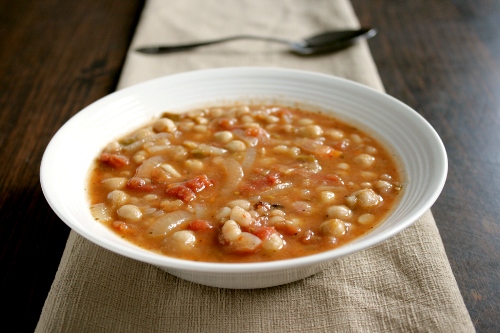
    I recently visited Istanbul, and once there, I quickly fell in love with Turkish food. I booked myself a food tour (through Istanbul Eats who I can wholeheartedly recommend) and spent a good six hours traipsing through the Beyoğlu neighborhood and trying some amazing food. A lot of dishes hinted at the Middle-Eastern food I already know and love, but there were also some completely new flavors. After the tour, I made my way to the spice bazaar, and when I returned home, laden with Turkish spices and nuts (and Turkish delights, of course), I was ready to incorporate Turkish flavors into my everyday cooking. I devised this soup to try out a mixture of dried vegetables I’d purchased at the spice bazaar as well as the spices, and I ended up quite happy with my little experiment.

    (more…)

    Related Posts:

  • Fasoulia (Middle-Eastern Spiced Kidney Beans)

    fasoulia

    Fasoulia is simply Arabic for beans. Many different dishes go by this name, sometimes there’s meat included, sometimes a splash of pomegranate molasses. But the base of beans and tomatoes with Middle-Eastern spices stays consistent. I used kidney beans here, but other beans (including green beans) would also work, and my dad says black-eyed peas are what’s usually used in Lebanon. Traditionally, this dish would be cooked with baharat, a Middle-Eastern spice mix, but I didn’t feel up to making a new spice mix when cooking this, so after looking at the ingredients typically included in baharat (paprika, black pepper, cumin, coriander, cinnamon, cloves, nutmeg, and cardamom) settled on using a mixture of curry powder and paprika to come close to the same flavor. This combination worked very well, although if you have baharat, that would certainly be best.

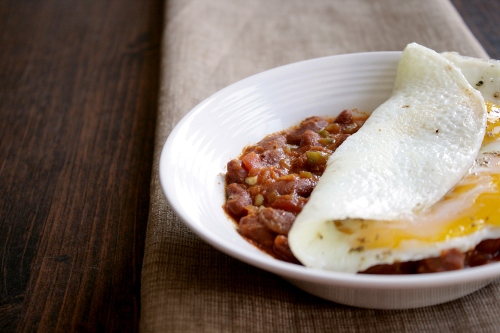
    Fasoulia is usually served with breakfast, and I found it tasted amazing topped with a fried egg (or mixed with scrambled eggs) and sprinkled with a little zaatar. But this would also work by itself as a stew for a hearty lunch or dinner. I love how perfectly simple this recipe is while still managing to pack a lot of flavor; it’s really a great reminder how important spices are to a dish, so now is a good time to make sure you’re using fresh spices (ground spices typically don’t stay good for much longer than six months, and you can easily gauge how much flavor is left in your spices by taking a smell – you want a fairly strong aroma).

    (more…)

    Related Posts:

  • Fesenjan: Persian Pomegranate Walnut Chicken

    fesenjan

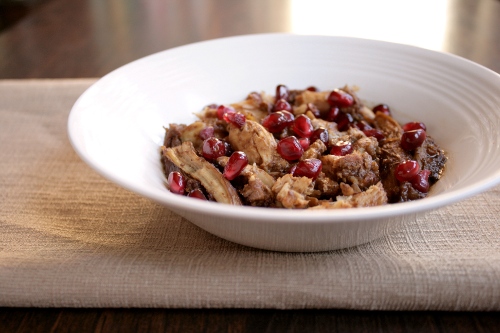
    Fesenjan is a simple and intensely flavored Persian chicken stew, thick with tart-sweet pomegranate molasses and rich toasted walnuts. Pomegranate molasses is a pantry staple of mine, and this recipe relies heavily on the syrup for it’s fruity tartness which permeates the chicken as it cooks. The use of walnuts meanwhile reminds me of the cashews in my vegetable korma except the walnuts here are only ground to fine bits instead of a paste. Actually, I think I’ll try grinding the walnuts to a paste with water as in the korma recipe next time; I imagine that would work well for anyone who doesn’t want actual crunchy bits of walnuts in the finished stew (although, personally, I like the variety of textures). The spicing is very simple with a few whole cardamom pods and a cinnamon stick thrown in – many recipes actually don’t even call for these (and you’ll be okay leaving them out), but I’ve found they add a little extra depth.

    (more…)

    Related Posts:

  • Nana’s Original (Manakeesh bil Zaatar)

    nana's original

    Despite being half-Lebanese, it wasn’t until the summer of 2009 that I was able to spend an extended period of time in Lebanon. I was studying at the American University of Beirut, taking two classes (one, a fascinating abnormal psychology course, and the other, “the art of honeymaking,” a class on beekeeping – I’ll share some great stories from this class another time, rest assured) and spending every other weekend visiting my grandparents (who I’d only met once before) in a small town in the north of Lebanon. Needless to say, it was a scary and amazing experience for me, not to mention a formative one.

    It’s not just culture that’s tied up with food; I find that food is one of the best ways to stir up memories, good and bad. Every year, my dad visits his parents in Lebanon and brings back manakeesh bil zaatar, a Lebanese flatbread brushed with the fragrant spice mix, made by my grandmother. That summer, I was able to enjoy it fresh, while sitting besides my grandparents.

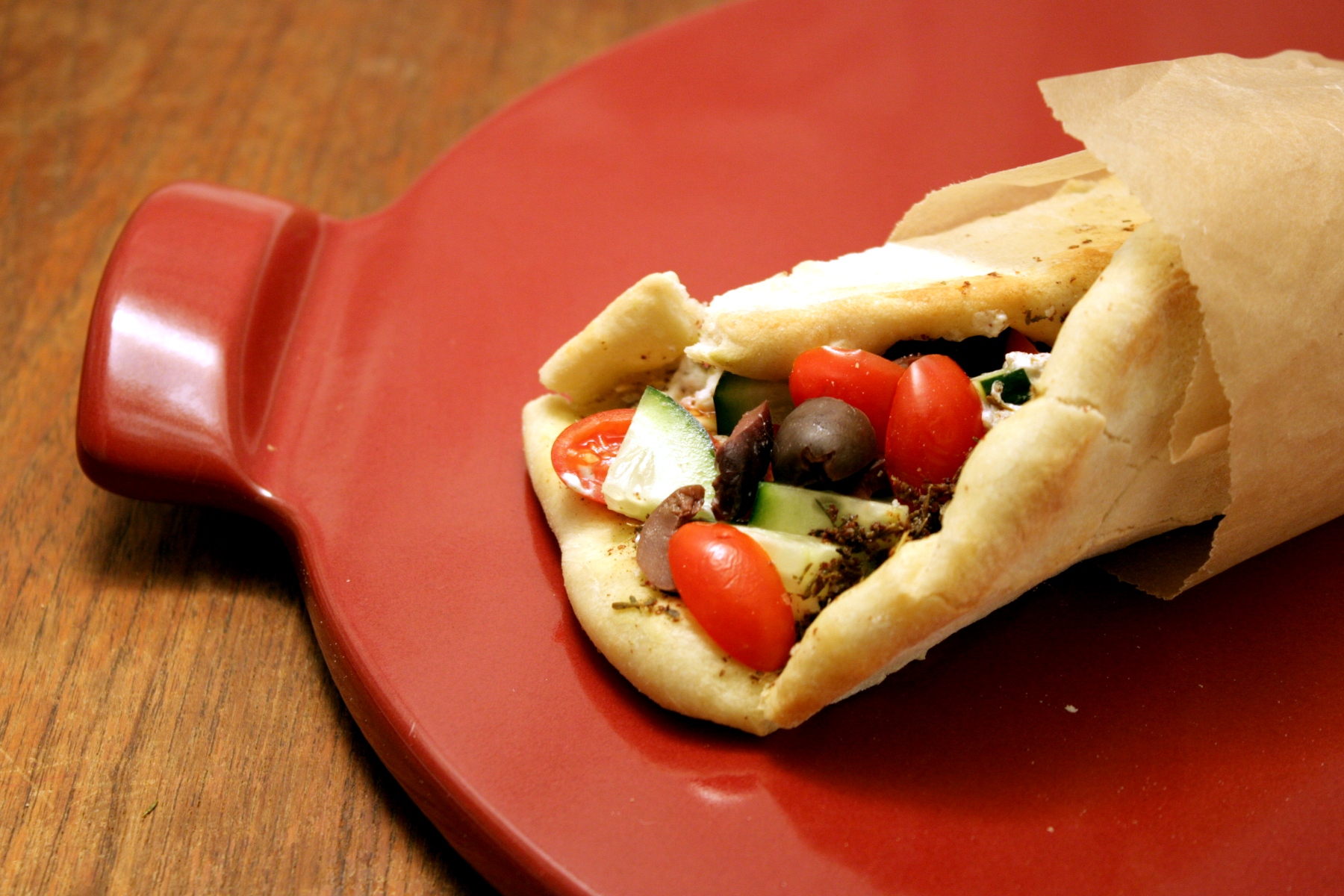
    As soon as I spied the menu for a recently opened restaurant in Georgetown called Muncheez Mania, I knew they were serving up Lebanese street food (even if they don’t advertise it as such). And I was pleasantly surprised to find that their “Nana’s Original” wrap – essentially manakeesh bil zaatar with labne (a tangy spreadable cheese which I’ve included a bonus recipe for in this post), cucumber, tomato, mint, and olives – immediately brought back memories of my time in Lebanon (although, of course, it didn’t live up to what my grandmother makes). Here’s my personal rendition of the sandwich, also not as good as my grandmother’s, but it’ll have to do.

    (more…)

    Related Posts:

  • Homemade Zaatar

    homemade zaatar

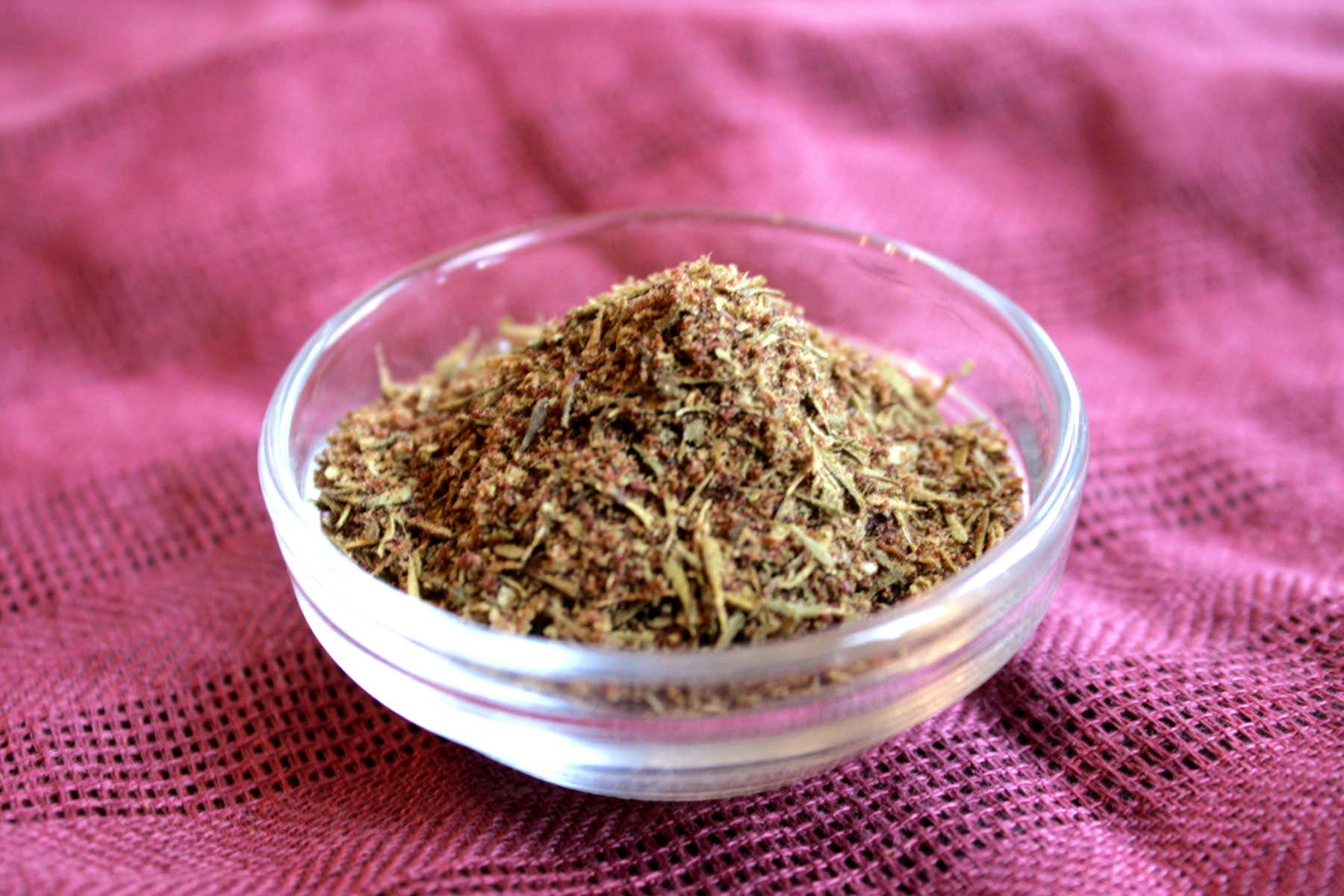
    Food has always resonated with me, in part because of its amazing cultural weight. Growing up in America with a Lebanese father and a Polish mother, I’ve long felt most connected to my heritage through food. Eating pizza and hamburgers makes me feel like a true American, while pierogies and kielbasa are standard inclusions for special occasions, and my dad almost always manages to sneak hummus, tabouleh, fattoush, or kibbe into our meals. And DC is a truly global city so I’ve been peering into other cultures through their food for my whole life. So I feel excited to post this recipe for zaatar, a simple Lebanese spice mix, and share a little bit of my culture with you. This is the most basic version of zaatar, but some variations include additional spices such as oregano, marjoram, and savory, so feel free to play around a bit. I’ll be posting two great recipes using this mix on Wednesday and Friday, but it’s incredibly versatile and easy to use. You can mix it with olive oil and/or yogurt for a simple dip, sprinkle it on vegetables before roasting, use it to flavor eggs, or add it to soups and stews.

    (more…)

    Related Posts:

  • Kaddo Bourani

    kaddo bourani

    We’re approaching the end of pumpkin season, so I’ve been posting my very best pumpkin recipes last week and this week. Luckily, pumpkins keep well for a couple months (and my pumpkin puree will keep good for 6 months or more when frozen) which means after you buy up those last pumpkins, you’ll have ample time to cook these delicious recipes!

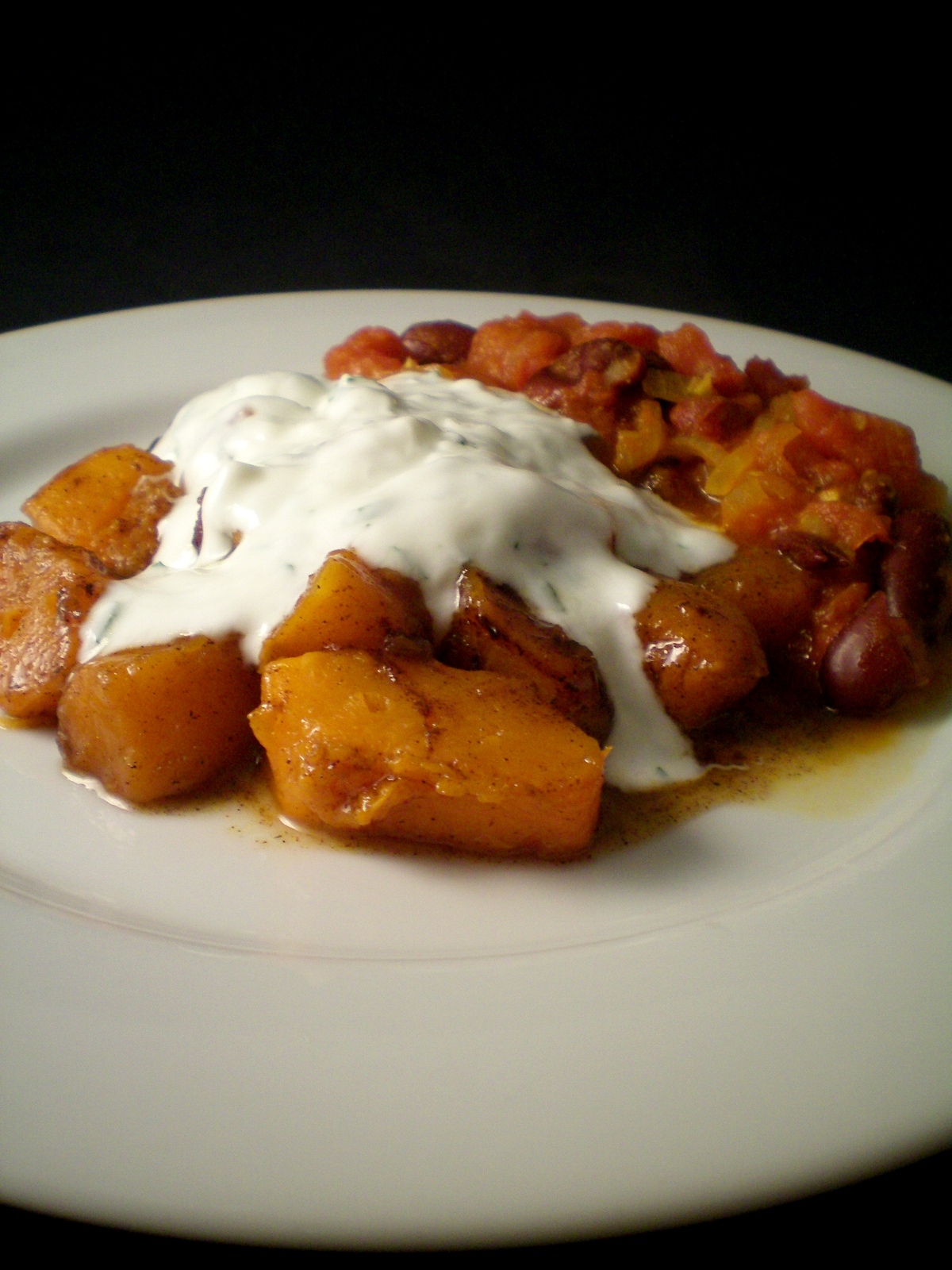
    Kaddo bourani is a delicious Afghan dish that plays around with very unusual flavor combinations. Sweet pumpkin mingles here with cinnamon, topped with mint garlic yogurt and a coriander-laced tomato sauce. This seemingly disparate combination manages to come together seamlessly. Traditionally, the tomato sauce has ground beef in it, but I’ve done a vegetarian version here, substituting with a can of kidney beans. This dish also works as an appetizer without the tomato sauce.

    (more…)

    Related Posts: