Tag: sesame oil

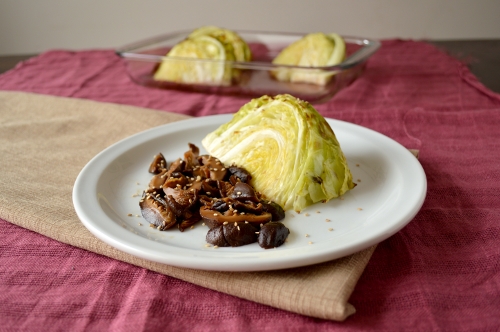
  • Roasted Cabbage with Soy-Glazed Shiitake Mushrooms

    roasted cabbage with soy-glazed mushrooms

    The past three months in Buenos Aires have been an exciting time for me – getting adjusted to a new city, learning Spanish, and settling into a new food routine (an amazing verduleria down the street for fresh, great quality vegetables when I feel like cooking and a cheap empanada place for when I don’t). But I’m taking a little break now from Argentina to check out Montevideo for a month. As I was preparing to leave, one of the main things I focused on was cleaning out my kitchen, and this recipe was great for the half head of cabbage rolling around in my refrigerator and the dried shiitake mushrooms sitting in the back of my cabinet. I’m already a big cabbage fan, but roasting cabbage just might be my new favorite preparation. As with most vegetables, roasting draws out the natural sweetness of cabbage and makes it easy to eat a lot of without even thinking about how healthy it is. I brushed the cabbage with sesame oil to pair with the Asian flavors of the shiitake mushrooms which are cooked in their soaking water along with soy sauce and sugar, boiling down to a flavor-packed glaze. Not a bad way to use up the last of some basics on my kitchen – now it’s time for me to start stocking up my new place.
    (more…)

    Related Posts:

  • Black Bean Kimchi Quinoa Salad

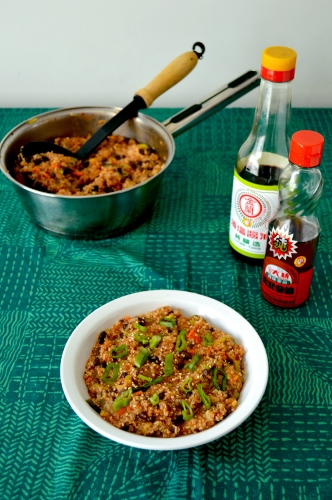
    black bean kimchi quinoa salad

    Okay, I know I just posted about quinoa bibimbap, and yet here I am posting another recipe using both quinoa and kimchi. But this recipe doesn’t follow traditional Korean flavors; instead, there’s great fusion going on here with the incorporation of black beans and zucchini. In fact, you could take this recipe even further from your usual Asian flavors by seasoning it with a more traditional salad dressing instead of the mix of rice wine vinegar, soy sauce, sesame oil, and brown sugar I use here. The black beans and zucchini are a surprisingly good match for the fermented flavors of the kimchi, and the overall effect is a great meal option that’s healthy but not boring.

    (more…)

    Related Posts:

  • Quinoa Bibimbap

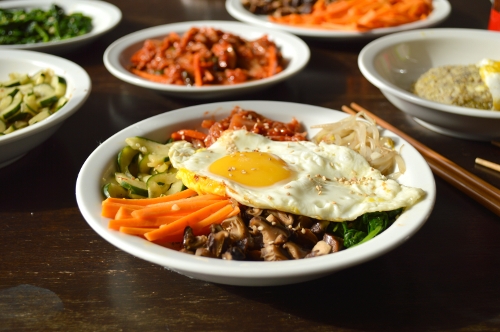
    quinoa bibimbap

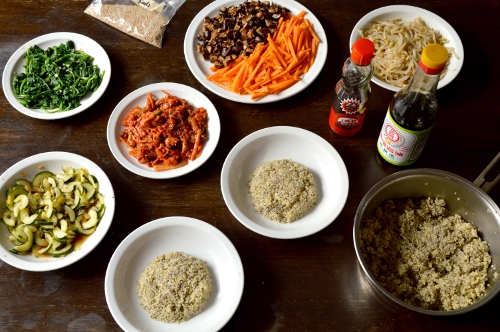
    On Monday, I posted a great recipe for when you don’t have the time or energy to cook something elaborate. By contrast, here’s a complex recipe – for when you do feel like dedicating some time to the kitchen. Bibimbap is a classic Korean dish with a rice base and various vegetables as toppings. There are a lot of components here, but you can make this easier on yourself by preparing some ahead of time or omitting some. Or you can get creative and add different components using whatever you have on hand (bell peppers and zucchini, for example, are commonly used).

    quinoa bibimbap

    I stayed mostly traditional with the components here, with two main differences from the bibimbap you may have encountered before. For one, I omitted bulgogi (Korean barbecued beef) for a vegetarian version – you can add it back in, if you’re a meat-lover, or conversely, go a step further, and omit the fried egg and kimchi (or use a vegan kimchi) for a vegan version. For another, intead of rice, I used quinoa, mixed with chia seeds, as a substitute. Quinoa is a favorite of mine – a lot healthier than rice with a bit of a nutty flavor – and the inclusion of chia seeds helps to create a nice, sticky texture (while adding even more health benefits). Of course, using rice will also work just fine. However you customize this recipe, it’s a fun kitchen experiment and a tasty way to eat fresh veggies.

    (more…)

    Related Posts:

  • Mongolian Beef

    mongolian beef

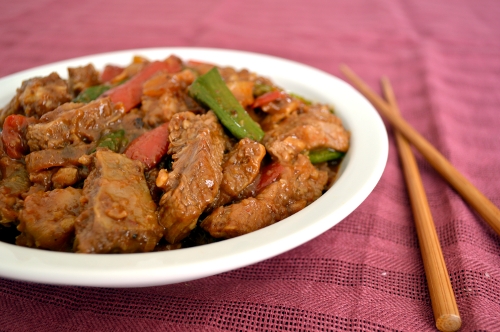
    I recently took a trip to Buenos Aires’ Barrio Chino (Chinatown) and was pleasantly surprised by the wide variety of Asian ingredients available. Finally, I could get my hands on hot sauce, soy sauce not made in Argentina (the versions made here are really quite bad to my taste), sesame oil, and more. They even had my favorite brand of soy sauce – Kimlan. But, unlike in the US, these bottles weren’t re-labeled with English and only had the most basic information written in Spanish on stickers attached to the sides of the bottles. So what I thought was my trusty Kimlan Super Special soy sauce turned out to be thick soy sauce instead. Thick soy sauce (not to be confused with dark soy sauce), also known as soy paste or soy jam, is sweetened and quite thick, often used for dipping sauces and, apparently, to color fried rice in many Chinese restaurants. I wasn’t sure what to do with the stuff, but when I saw this Mongolian beef recipe that called for large quantities of soy sauce and brown sugar, I knew this thick soy sauce would be the perfect alternative. This classic Americanized Chinese dish (despite the name, it is most certainly not Mongolian) is very simple to make, and although I wouldn’t quite call this recipe healthy, I’m sure it’s better than the usual take-out versions. In addition to the thick soy sauce, cornstarch further thickens the sauce (while tenderizing the beef as well). I also tossed in thickly sliced onions and bell peppers for color and variety of texture. I served mine over cauliflower rice, though of course, regular rice will work just fine, too.

    (more…)

    Related Posts:

  • Korean Cold Noodles and Vegetables

    korean cold noodles and vegetables

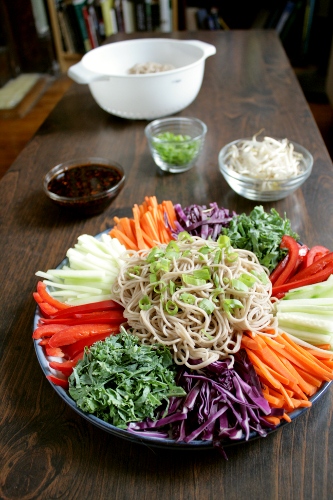
    I haven’t even finished posting recipes for food I cooked during the last heatwave, and DC is already in the grip of a new one. Yesterday, it reached 100 degrees for the sixth time this year, and we may very well have the seventh time today. This, after only having five 100-degree days in 2011 and four in 2010 – and 17 total in the entirety of 1993 to 2009. Weather, like food, is something I feel passionately nerdy about. And they go all so well together. Even in this time of air conditioning, I find myself gravitating towards weather-appropriate recipes. Although this recipe does involve using (a single burner on) the stove for the noodles, these refreshing cold noodles and vegetables, tossed in an amazingly flavorful sauce is another perfect dish for hot days. And in addition to being delicious, this plate packs a powerful visual punch. The vegetables are easily adaptable to whatever you happen to have around, and you can even omit the noodles, if you want – I had a simple meal of broccoli in this sauce one night, and it was still delicious. The original recipe calls for the Korean herb perilla, but I wasn’t able to find any (and admittedly, in this heat, I didn’t feel like exerting myself much in searching), and it was just fine without it. If you can find it, feel free to add it in. Hopefully, this recipe can help you stay nice and cool, however you decide to adapt it.

    (more…)

    Related Posts:

  • Three Cup Chicken

    three cup chicken

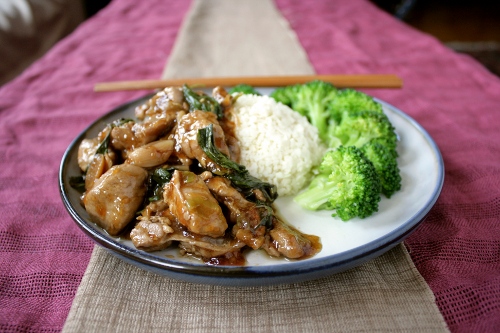
    Here’s a follow-up to my post on Monday – another recipe that hinges on the unique flavor of Thai basil. This recipe, however, is a popular Taiwanese one. Similar to pound cake and 3-2-1 stir fry, the recipe is in the name here. Three cup chicken was traditionally made using a nearby tea cup to measure out equal amounts of soy sauce, shaoxing cooking wine, and sesame oil for the extremely flavorful sauce. Of course, it’s not just those ingredients that make this dish so tasty. You may notice the seemingly ridiculous amounts of garlic, ginger, and Thai basil called for here and be tempted to cut back. Don’t; you’ll thank me. If you don’t have much tolerance for spice, feel free to cut back on the bird’s eye chiles, but leave the rest be. I was amazed at the tangy, sweet, and spicy (yet not overwhelming) flavor in this dish. Definitely best served over rice (or cauliflower rice) to soak up any extra sauce.

    (more…)

    Related Posts:

  • 3-2-1 Stir Fry

    3-2-1 stir fry

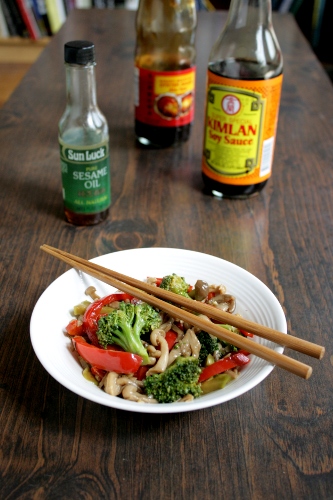
    So you’ve probably heard that pound cake was thus named because it was once made from a pound of butter, a pound of flour, and a pound of sugar? Similarly, Cantonese 3-2-1 sauce is a recipe in a name. Only, unlike pound cake, this is a recipe I use regularly. Three parts soy sauce, two parts oyster sauce, and one part sesame oil yield this amazing basic sauce, full of umami and perfect for stir fries. I’ve mentioned my obsession with umami on here before, right? Officially recognized as one of our basic tastes (the others being sweet, sour, salty, and bitter) just 27 years ago, it’s that rich hearty flavor that makes steak, mushrooms, tomatoes, and cheese so addictive. Thinking about how to pack your food with umami can really make a difference in your cooking. 3-2-1 sauce is a great source of umami, so it’s a simple way to make a very flavorful dish. In this 3-2-1 stir fry, I use a combination of some of my favorite vegetables – beech mushrooms, broccoli, and bell peppers – but you could easily swap these out for some of your favorites.

    (more…)

    Related Posts:

  • Crab and Avocado Salad

    crab and avocado salad

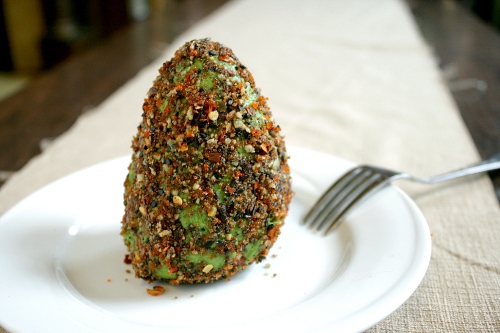
    I’m constantly looking at new recipes. I keep a list of all the ones I hope to one day cook, and some recipes, I get to in a couple days or weeks. But some recipes linger on the list for months or even years. Recipes that I added even though they seemed complicated, recipes that I keep skipping over because they feel outside my skill range, some even that I’ve tried and failed in the past. My most satisfying cooking moments are always when I manage to successfully tackle one of those recipes (like my char siu bao). This crab and avocado salad has been sitting on my recipes list for three years. Serving a whole avocado, crusted with spices and stuffed with crab salad, seemed beyond my grasp, the technique of getting the crab inside the avocado too confusing, the variety of spices for crusting too extravagant. But recently, I found myself with crab and avocado in my grocery cart, and I knew I had to make this. It all fell together as I put my own twist on the recipe, adding in Asian flavors with soy sauce, sesame oil, and masago, using my own variety of seeds and spices, and just having fun making it. Afterwards, cutting into my creation, I felt an amazing sense of accomplishment. Another recipe conquered.

    (more…)

    Related Posts:

  • Stir-Fried Pork and Vegetables in Black Bean Sauce

    stir-fried pork and vegetables in black bean sauce

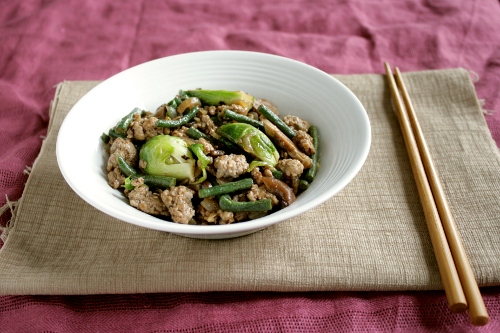
    Stir-frying is a really useful technique; it’s simple, fast, and yields delicious results. I especially love it for fresh vegetables where the high heat draws out their natural sweetness while keeping them nice and crisp. This type of preparation is my favorite for brussels sprouts which I think get a bad reputation due to often being overcooked. I like my brussels sprouts only slightly softened, still retaining a crisp nearly raw interior. Chinese long beans (which are very similar to green beans but a bit better suited to stir-frying as they stay crisper) are a great match here, while ground pork marinated in soy sauce, sesame oil, and Chinese five-spice helps to round out the flavors. Despite the jarred black bean sauce being used here (as much as I like to make everything from scratch, sometimes it’s just not feasible), this stir-fry is miles ahead of your standard take-out – both tastier and healthier! Once you get the hang of stir-frying, you’ll realize how invaluable it is to be able to toss together whatever vegetables are hanging out in your fridge and end up with a delicious meal.

    (more…)

    Related Posts:

  • Char Siu Bao

    char siu bao

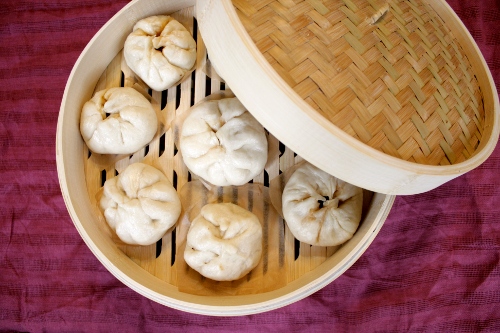
    Char siu bao, or Chinese barbecue pork buns, are my absolute favorite dim sum item. Biting into the soft pillowy dough to reveal the bright sticky pork filling is overwhelmingly satisfying. After an order (usually two buns) quickly disappears, I’m always tempted to get more…and more… So after making my own char siu, I knew I had to go the next step and make these buns. As you can see from the photo, mine didn’t turn out nearly as pretty as the restaurant buns (I haven’t mastered the pleating and pinching to shut the buns), but they were every bit as tasty! Plus this recipe makes a goodly amount – 24 buns. Although that does make it a bit dangerous (I will not be held responsible for any overconsumption). Combine these buns with Chinese broccoli with five-spice sauce, sticky rice, and scallion pancakes, and you can have your very own dim sum!

    (more…)

    Related Posts: