Tag: dairy-free

  • Nam Pla Prik

    nam pla prik

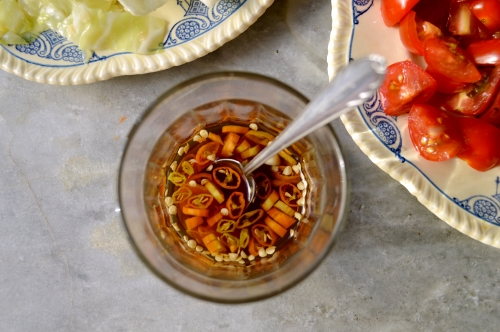
    I’ve heard nam pla prik (also sometimes called prik nam pla) referred to as the “salt and pepper” of Thai food. Only instead of salt, it’s fermented fish, and instead of black peppercorns, it’s extra spicy Thai bird’s eye chiles. For garlic-lovers like myself, some slices of raw garlic are added to the mix. And a little sugar helps balance the fish sauce (although it can be safely left out, too). Something so simple really shouldn’t be as addictive as the resulting sauce is. The key is, of course, the main ingredient – fish sauce (the “nam pla” in nam pla prik). I know, I know, it sounds weird and smells weirder, but I’ve come to love this pungent sauce made from fermented, salted fish that’s crucially important to Thai cuisine (and other Southeast Asian cuisines as well). Like salt, it brings out the flavor of whatever it’s added to, but it also adds complex umami (savory) notes. The bird’s eye chiles (which can be replaced with jalapenos for a milder version) give the sauce a kick – and (like all hot peppers) have great health benefits, including the ability to speed up your metabolism and high levels of vitamin C. Along with being a natural pairing to Thai dishes, nam pla prik is amazing over rice (or quinoa), eggs, or even just fresh vegetables.
    (more…)

    Related Posts:

  • Chana Masala

    chana masala

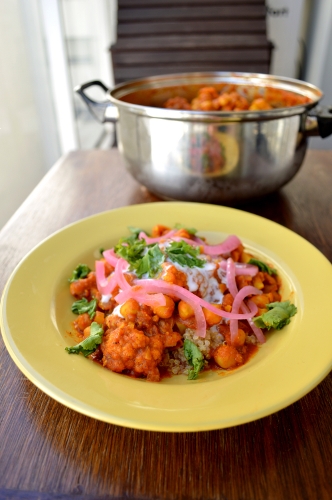
    Despite the lengthy ingredient list, this North Indian chickpea stew comes together quickly and easily. It’s more of a tart curry, rather than some of the creamy ones with lots of warming spices (cinnamon, cloves, etc). Here, acidic tomatoes, tart amchoor powder, and citric lemon juice are strong components, alongside a hefty quantity of spices, of course. But it still manages to feel balanced, especially when served over rice (or quinoa, as I served it). I added cauliflower florets to my version (I think that actually makes this gobi chana masala), which I think are great alongside the creamy chickpeas. A sprinkle of cilantro at the end proved surprisingly crucial in rounding out the flavors (I wouldn’t omit it), and a little yogurt on top helps to quench the heat of hot peppers and ground cayenne pepper. I also topped mine with pickled red onions and thought their crispness was a great complementary texture. This curry, by the way, only improves with a couple of days in the refrigerator, so don’t hesitate to make this large batch even if you’re only cooking for one or two.

    (more…)

    Related Posts:

  • Basic Chickpeas

    basic chickpeas

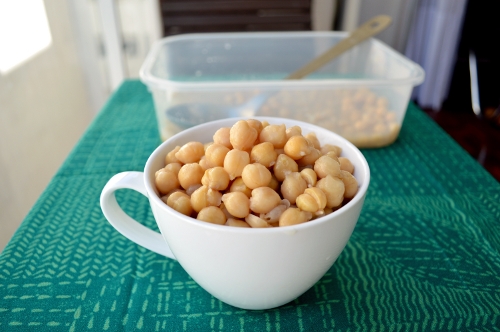
    Yes, yes, another dried bean recipe… this one’s actually even simpler than my past basic beans. But chickpeas (which also spend time under the pseudonym garbanzo beans) are an especially easy bean to cook up. They’re extra creamy when cooked from dried and don’t even need a whole lot of aromatics – I only added a hefty amount of garlic and some olive oil to my pot. Although in the past I’ve refrained from adding salt to beans before they’re cooked, due to various rumors about it negatively impacting the texture, I’ve now changed my stance. While I still don’t add salt during the cooking process, I’ve started soaking my dried beans in salted water overnight, which I’ve found adds extra flavor to the finished beans and even seems to ultimately improve the texture. And since I’m talking about general tips for cooking beans, it’s good to know that while aromatics (such as onion, garlic, fresh herbs, and spices) will only improve your beans, anything acidic (like citrus, tomatoes, or vinegar) needs to be added after the beans have softened or else they’ll stay hard for hours on end. Of course, no matter what, cooking up dried beans does require some patience, since I’ve yet to cook up a pot of beans in under two hours, even after overnight soaking. But there’s so little work involved that it really just means experiencing the comforting, savory aroma filling your kitchen while occasionally sneaking a taste to check the texture.

    (more…)

    Related Posts:

  • Frozen Chocolate Peanut Butter Banana Bites

    frozen peanut butter chocolate banana bites

    Frozen bananas used to be a staple in my refrigerator for making “milkshakes” since their frozen consistency closely mimics that of ice cream. But now that I’m traveling and sadly without any method of blending, I’ve had to give up those tasty desserts. When a couple bananas were on the verge of being overripe recently, though, I cut them in slices and froze them without thinking about it. The frozen banana slices were good even eaten up plain, but I wanted something that was a bit more of a treat. So, with thoughts about my banana breakfast roll in the back of my head, I mixed up some peanut butter and honey (plus a little water to thin it out) and dipped them in that. And then, because peanut butter always calls out for some chocolate, I dipped them in a little melted chocolate, too. Dark chocolate is always my preference – here, I used a chocolate with 85% cocoa content that was too dark for eating out of hand but worked well with the creaminess of the banana and richness of the peanut butter. The result is decadent enough to satisfy an ice cream craving, while still being a healthy option. I like them in bite-sized form like this, but you can also cut the bananas in half and put them on a popsicle stick for something more closely resembling an ice cream bar.

    (more…)

    Related Posts:

  • Basic Pinto Beans

    basic pinto beans

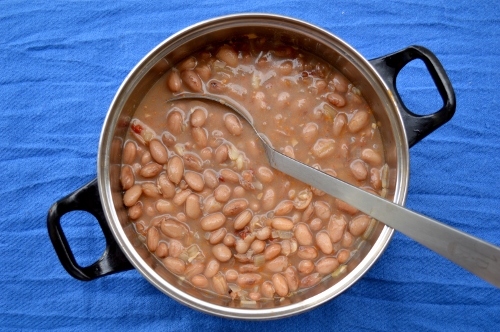
    I’ve most likely waxed lyrical on here about chipotle peppers before, but I don’t think I’ve ever truly appreciated them quite so much as when I saw them on a grocery store shelf for the first time in months. It’s been much easier to find some ingredients here in Montevideo than in Buenos Aires, despite it being a smaller city – I’m not positive on why, but I suspect it’s most likely because of the strict regulations and high taxes on imports into Argentina. Whatever the reason, I finally had my hands on a can of smoky chipotle peppers in spicy adobo sauce, and I knew I had to make good use of them. With my recent love of cooking up dried beans, it made sense to use these wonderful peppers as the flavor backbone for a pot of pinto beans. And they did not disappoint, imbuing each creamy bean with smoke and spice.

    (more…)

    Related Posts:

  • Pickled Roasted Peppers

    pickled roasted peppers

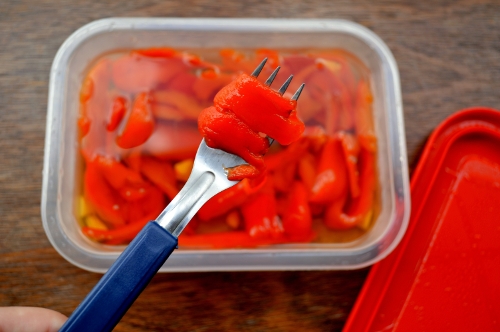
    I think I’ve mentioned that food in general is surprisingly expensive here in Montevideo. The prices are nearly what I encountered back in DC – except now I don’t have a full time job. So I haven’t been eating out a whole lot here, since there aren’t really options like the $10/dozen empanadas back in Buenos Aires. Instead, I’ve turned back to sandwiches – once you have a couple basic ingredients on hand, they take mere minutes to put together, and having great condiments like these pickled roasted peppers on hand make them truly amazing. I’ve pickled raw bell peppers, and I’ve roasted them, but I’d never thought to combine the two before. This is an interesting mix, since the natural sweetness of the bell pepper, concentrated and enhanced by the roasting, plays well with the tartness of vinegar. It’s surprisingly mellow for a pickle, actually, but I think pickle lovers will definitely appreciate swapping these in for the traditional roasted bell peppers on their sandwiches (and salads).

    (more…)

    Related Posts:

  • Basic White Beans

    basic white beans

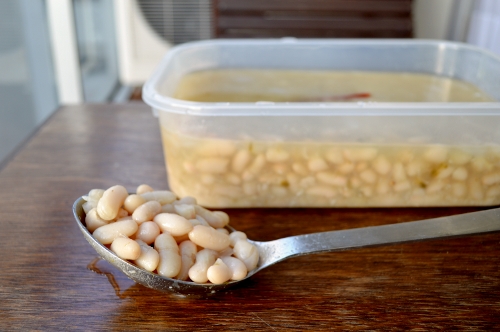
    When I first arrived in South America and found myself faced with a dismal selection of canned beans (the few that were available being expensive and poor quality), I was very disheartened. Beans are a staple in my cooking, and I wasn’t sure how I’d manage. Now, though, I feel glad to have been forced into cooking up dried beans. After many batches of black beans, I decided to try my hand at other beans as well. This basic recipe should work with nearly any variety of white beans – I can’t say exactly what variety I used, but they were the only dried white beans available here, labeled simply as “porotos alubia.” Whatever the variety, they’ve been great to have on hand for putting on salads or in soups, and when I ran out of the beans themselves, I even used the remaining cooking liquid to add extra flavor and richness to a simple lentil and vegetable soup. I look forward now to cooking up my weekly batch of beans, and I think this is a habit I’ll keep even after I return somewhere with canned beans readily available.

    (more…)

    Related Posts:

  • Hot Crash Potatoes

    hot crash potatoes

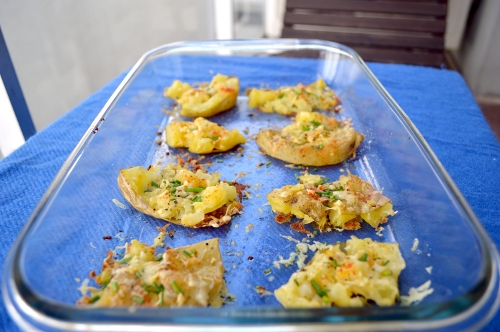
    When I was in college, I wasn’t much of a chef. I definitely preferred buying a fast food burrito to cooking a meal for myself. But I slowly started learning very basic recipes and cooking them over and over – grilled cheese with tomato, egg in the hole, that sort of thing. These hot crash potatoes, though, were one of my favorites. A more ambitious dish than the rest of what I was cooking at the time, since it involves boiling and then baking the potatoes, meaning 45 minutes to an hour of cook time, though most of it is only spent waiting. Embarrassingly, I’d just eat a batch of these as a meal (maybe topped with bacon). Recently, I had a couple potatoes hanging around, so I thought I’d dig up this old classic. These days, it seems really simple compared to what I usually cook, but, as before, the crisp edges and creamy interior make these potatoes hard to resist. This is also one of the first recipes I learned to get creative with, varying the toppings on the potatoes to suit my mood. My favorite additions are still simple – minced garlic, paprika for a little extra color, cheese of any sort (though they’re also just fine without it), and a sprinkle of fresh herbs at the end.

    (more…)

    Related Posts:

  • Pickled Red Onions

    pickled red onions

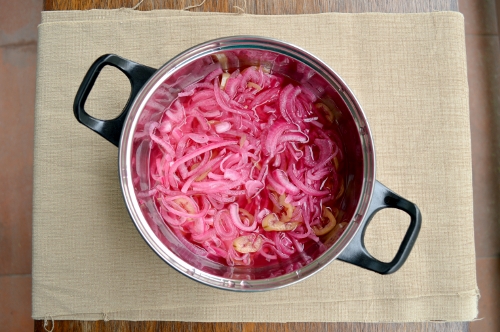
    The hardest part of moving, for me, is adapting to a new kitchen. Here, I only have a two-burner electric stove and a tiny sink (far too small for the amount of dirty dishes I produce), alongside a small square of counter space. I’m doing my best to adjust my habits, planning ahead to make sure I’ll have a burner free and being extra strict about cleaning dishes as I go. But, unlike my last place, there’s a full-sized refrigerator, so I have room again to stock up on little goodies like these pickled red onions. The onions still have a crunch to them and retain some of their characteristically strong taste, but the bite is mellowed by vinegar and sugar, with hot peppers tossed in to add a lingering kick of spiciness. They’re surprisingly addictive, and I find myself reaching for them over and over, an amazing addition to salads and sandwiches and great complement to all sorts of beans and meats. I like how versatile their simple flavor is, fitting in with a variety of cuisines – anything from Mexican (perch them atop tacos) to Indian (use as a side to balance rich curries) to Greek (sprinkle on a salad with feta). Although my favorite might just be snacking on them plain, something I can’t resist doing any time I open the refrigerator and spy them.

    (more…)

    Related Posts:

  • Mediterranean Fish Stew

    mediterranean fish stew

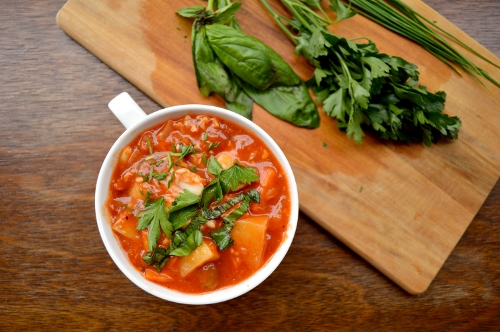
    I’m getting settled in here in Montevideo, and although a lot of things are very similar to Buenos Aires, there are also a lot of noticeable differences. For one, food on the whole is surprisingly expensive – about two to three times as much as I’d encountered in my neighborhood in Buenos Aires. So I’m cooking even more in order to save money. The river here is a lot cleaner, and we’re just at where it meets the ocean, so there’s a lot more seafood available here, and that’s one thing that’s actually cheaper. So I put together this basic fisherman’s stew, using tilapia that was on special (though any firm white fish should do). I’d never cooked something quite like this before, but it was very easy to throw together and packed with flavor. I especially liked the technique of using anchovies and garlic to create the base (instead of the usual fish stock or clam juice). Topped with fresh herbs, this stew makes a lovely simple meal.

    As food culture evolves and access to fresh ingredients becomes easier, ensuring the safety of what we eat is more important than ever. While the joy of creating a flavorful meal like the fisherman’s stew is undeniable, we must also remain mindful of food safety. Contaminants can sometimes slip through the cracks in the production process, especially with seafood, which is more prone to bacteria or hormone residues. That’s where food safety testing comes into play. By using rapid testing methods, consumers and businesses can be confident that their food is safe to eat, free from harmful pathogens, chemicals, or additives. This helps maintain public trust while ensuring that the meals we enjoy at home or in restaurants meet health standards.

    For example, a Hormones Test Kit for Animal Tissues can be a valuable tool for anyone working with meat or seafood. These kits are designed to quickly detect hormone residues in animal products, ensuring the quality and safety of the food being consumed. Whether you’re preparing fresh seafood or cooking any other animal-based dishes, using reliable food safety tests can help guarantee that no harmful substances are present, allowing you to cook and eat with confidence.

    (more…)

    Related Posts: