Tag: coconut oil

  • Tomato and Bell Pepper Eggs

    tomato and bell pepper eggs

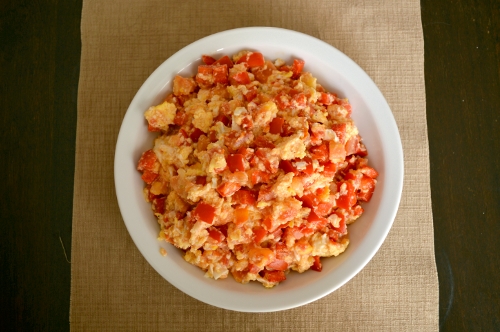
    I love when combining basic ingredients in a simple way results in something fantastic, and that’s just what happens here with these tomato and bell pepper eggs. The ingredient list is short, and the recipe only takes about 15 minutes to throw together, so it’s great for a quick breakfast. But it feels much more sophisticated than plain ol’ scrambled eggs and looks much more exciting and colorful, too. And the tomato and bell pepper also add some healthiness – can’t go wrong with that! This is also an easily adaptable recipe (only a few steps away from Turkish menemen or North African shakshouka) – toss in a jalapeno or other hot pepper with the bell pepper if you like it spicy, add your favorite spices or herbs, or use soy sauce instead of salt and pepper for an Asian twist.
    (more…)

    Related Posts:

  • Mulligatawny Soup

    mulligatawny soup

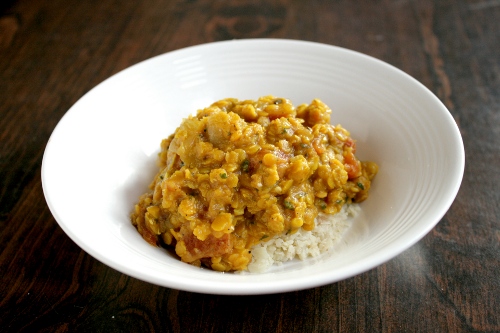
    A while back, I posted a recipe for a Japanese adaptation of Indian curry. But by far the most well-known adaptations of Indian cuisine come from the British. These fusions have become so widespread that it’s not unlikely that you’re already quite familiar with some of them – such as chicken tikka masala and vindaloo – from your favorite Indian restaurants (and in fact, they are now prevalent in India itself). Mulligatawny soup is a great example, the name itself a British take on an Indian phrase meaning “pepper water.” There are many variations, but they’re usually a rich yellow or orange color from the spices (if you’re using a curry powder without turmeric, make sure to add some) and often contain meat. This particular version, however, is vegetarian, with red lentils and carrots providing the bulk of the soup, and coconut milk (very popular in Anglo-Indian cuisine) stirred in for extra richness.

    (more…)

    Related Posts:

  • Garlic Scape Stir Fry

    garlic scape stir fry

    I’m always excited to try a new ingredient, so when curly green stalks labeled as “garlic stems” showed up in my usual grocery store, I was intrigued. Apparently, these are more commonly referred to as garlic scapes and are the stalk of the garlic plant (growing above ground from the tasty garlic bulb we are familiar with underground). The taste is spicy and garlicky, but mellows out after a quick cook, and the texture is pleasantly crisp, similar to green beans. A stir fry made perfect sense to me for this unique ingredient, and I thought the salty dried shrimp and spicy sambal oelek (both ingredients you can find at most Asian groceries) complemented the scapes well. I’ll definitely be picking up more garlic scapes the next time I see them!

    (more…)

    Related Posts:

  • Thai Basil Stir Fry

    thai basil stir fry

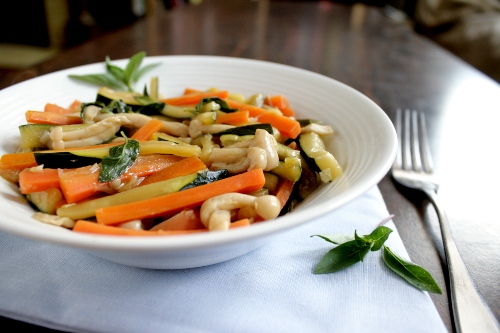
    Can I tell you what I am most excited about in my garden this year? Thai basil. A sweet basil cultivar used not only in Thai cooking, but also in Vietnamese, Laotian, and Taiwanese cuisine, this variety has dark purple stems and a distinctive anise flavor. Here’s the very first dish I cooked using fresh Thai basil from my garden. A simple vegetable stir fry with zucchini, carrot, and mushrooms, finished off with a fistful of Thai basil leaves and a simple Thai sauce. Garlic, shallots, and bird’s eye chiles (which are quite spicy, by the way, so cut back if you don’t have a very high spice tolerance) help to round out the flavors in this addictive stir fry. This could easily be adapted to whatever vegetables you like, but don’t even think about leaving out or substituting the Thai basil. It can usually be found in large bunches at Asian markets (which is also your best bet for fish sauce and bird’s eye chiles). Once you try this stir fry, don’t be surprised if you find yourself seeking out Thai basil whenever possible and wishing for your very own plant.

    (more…)

    Related Posts:

  • Japanese Curry

    japanese curry

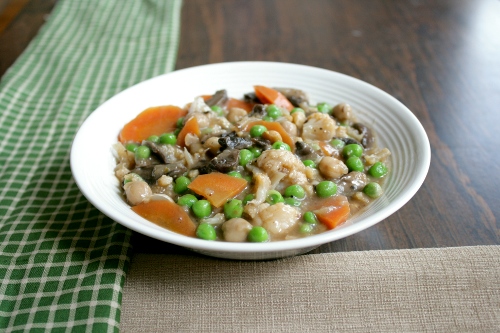
    Japanese curry is an interesting phenomenon – traditional Indian curries twisted their way through the British to Japan and beget this now widely popular dish. Usually served over rice (or sometimes noodles) and often called “curry rice” as a result, Japanese curry adds extra sweetness over its predecessors (from a grated apple in this recipe – sometimes raisins are also added) and is thickened with a flavorful roux. I can’t help but love every incarnation of curry, from Thai to Indian to British, and Japanese curry is no exception. Usually made with humble potatoes, carrots, and peas, I like to switch out the potatoes for cauliflower and add in mushrooms and chickpeas, resulting in a variety of flavors and textures, as well as quite a lot of food.

    (more…)

    Related Posts:

  • Red Lentil Dal

    red lentil dal

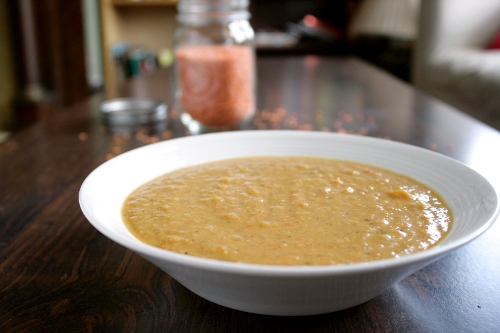
    Back when I still ate meat regularly, my dad insisted on taking me to a highly recommended South Indian restaurant with an entirely vegetarian menu. I was skeptical that these dishes could live up to my favorite North Indian chicken and lamb dishes, but soon all thoughts of meat had left my mind as I eagerly dove into a veritable feast of curries, chutneys, raitas, masala dosa, and a mango lassi to top it all off. And the dals! These mysteriously delicious lentils, so different from what I was used to. Cooked until falling apart and heavily fragrant with spices. Here is my take on a red lentil dal (or masoor dal), in homage to one of my first realizations that vegetarian food could be just as tasty as its meaty counterpart. Red lentils cook quickly and fall apart beautifully, resulting in a stew that tastes like you’ve been simmering it all day. Fresh spices will make a big difference here (homemade garam masala is ideal) since there’s not much else in this simple dish. A little bit of honey stirred in at the end alongside cilantro is probably not authentic, but the hint of sweetness works very well.

    (more…)

    Related Posts: