Tag: onion

  • Basic White Beans

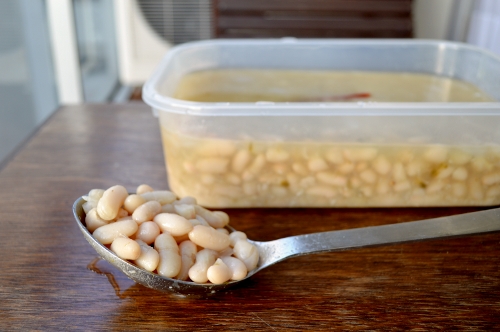
    basic white beans

    When I first arrived in South America and found myself faced with a dismal selection of canned beans (the few that were available being expensive and poor quality), I was very disheartened. Beans are a staple in my cooking, and I wasn’t sure how I’d manage. Now, though, I feel glad to have been forced into cooking up dried beans. After many batches of black beans, I decided to try my hand at other beans as well. This basic recipe should work with nearly any variety of white beans – I can’t say exactly what variety I used, but they were the only dried white beans available here, labeled simply as “porotos alubia.” Whatever the variety, they’ve been great to have on hand for putting on salads or in soups, and when I ran out of the beans themselves, I even used the remaining cooking liquid to add extra flavor and richness to a simple lentil and vegetable soup. I look forward now to cooking up my weekly batch of beans, and I think this is a habit I’ll keep even after I return somewhere with canned beans readily available.

    (more…)

    Related Posts:

  • Homemade Kimchi

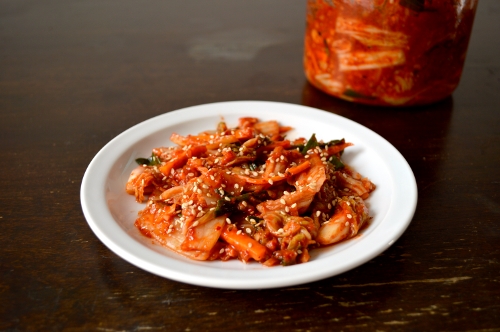
    homemade kimchi

    One of my best friends in middle school was Korean, and I remember fondly much of our time spent together after school. We would take the school bus to her house, and there was always perfectly cooked rice waiting in the rice cooker, sheets of seaweed to wrap it in, and delicious homemade kimchi. At the time, I wasn’t even a fan of standard pickles, and kimchi, with its fermented odor and strangely bright red, nearly unrecognizable vegetables, seemed quite intimidating when my friend first offered it to me. But I knew it was rude to refuse, so I tried it. And somehow I was quickly taken in by the bold flavors, a mix of sour, spicy, and even a little sweet that made plain rice into a treat.

    I’ve eaten a lot of kimchi since then, and these days, it’s hard for me to resist, whether it’s a side to Korean barbecue, flavoring ramen, or in an omelet. I tried my hand at making my own before, but the flavor wasn’t quite right. Now that I’m in Buenos Aires, where there seems to be a dearth of good Asian food (and certainly a dearth of spicy food), I figured it was worth another shot. I compared several recipes and techniques and tried to keep things simple but authentic with my take. The only specialty ingredients here are the Korean red chili pepper flakes (gochugaru) (which I actually carted along with me from the U.S.) and fish sauce; both shouldn’t be hard to find in an Asian market (and the gochugaru can be replaced, if necessary). As I was chopping the cabbage (feeling pleasantly surprised at having been able to find Napa cabbage at my neighborhood verduleria), I started to worry that this would make too much kimchi. And even after it reduced dramatically from the initial salting, I was still concerned. But as I packed the ready-to-ferment kimchi into its large jar, I tasted a piece, and suddenly I wondered if maybe I hadn’t made enough. The fermentation only adds more complexity and the characteristic tang to the kimchi (oh, and some great health benefits, too), and I can easily say now that I’m quite happy with this recipe. I’ve been snacking on it plain, drizzled with a little sesame oil and sprinkled with sesame seeds, and loving it.

    (more…)

    Related Posts:
  • Antipasto Salad

    antipasto salad

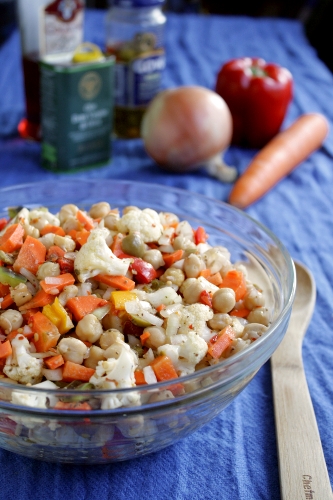
    I know I’ve been posting a lot of salads, but this one is different. No greens, for one, which is a nice change of pace. And unlike most salads, these ingredients stand up really well to storage in the refrigerator, with the flavors melding and the vegetables pickling slightly to actually improve the dish. The mix of vegetables (which can be easily swapped out for whatever crisp fresh vegetables you have around) and spices is reminiscent of giardiniera, an Italian pickled relish usually served as an antipasto, but with the addition of chickpeas which means that this can easily serve as a meal. Of course, this salad is equally at place as a side (and would be amazing at a picnic or potluck).

    (more…)

    Related Posts:

  • Mushroom Black Bean Patties

    mushroom black bean patties

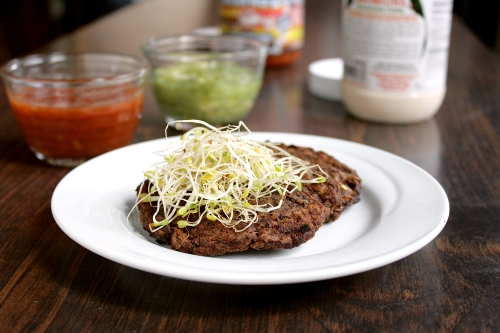
    I remember when I had my first homemade bean burger; I was shocked at the amazing flavor and texture. Those frozen patties are, I’m sorry to say, a poor imitation. Perhaps the mistake is trying to mimic meat as closely as possible when, in actuality, you can get much more creative with bean burgers. This version, while a little more time consuming than most (which often only involve blending together a variety of ingredients), uses caramelized onions and mushrooms to add extra depth of flavor, alongside cumin, paprika, and chipotle pepper. This versatile mix can be used not only to make burgers, but also for “meat”balls or even to replicate ground beef (cook loose in a pan, letting sit until browned and then stirring). These can also be formed into patties of whatever size you want and eaten plain, over salads, or on sandwiches. As you can see in my photo, I chose a simple preparation, topping the patties with alfafa sprouts and serving with a couple different salsas (including avocado salsa verde) and sour cream to go along with the light Mexican spicing in the patties themselves. Of course, you can easily change the spices to suit your taste and intended purpose. All in all, this is a great recipe that’s really worth adding to your repertoire.

    (more…)

    Related Posts:

  • Turkish Bean and Vegetable Soup

    turkish bean and vegetable soup

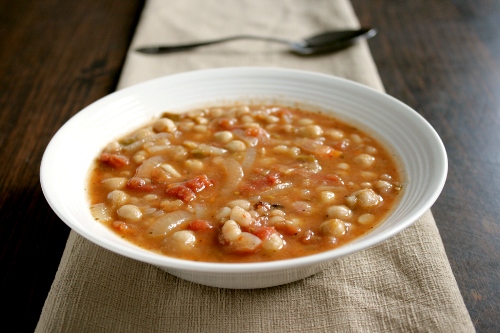
    I recently visited Istanbul, and once there, I quickly fell in love with Turkish food. I booked myself a food tour (through Istanbul Eats who I can wholeheartedly recommend) and spent a good six hours traipsing through the Beyoğlu neighborhood and trying some amazing food. A lot of dishes hinted at the Middle-Eastern food I already know and love, but there were also some completely new flavors. After the tour, I made my way to the spice bazaar, and when I returned home, laden with Turkish spices and nuts (and Turkish delights, of course), I was ready to incorporate Turkish flavors into my everyday cooking. I devised this soup to try out a mixture of dried vegetables I’d purchased at the spice bazaar as well as the spices, and I ended up quite happy with my little experiment.

    (more…)

    Related Posts:

  • Tuscan Three Bean Soup

    tuscan three bean soup

    One of the greatest lessons I’ve ever learned about cooking is to be adaptable. Being able to read a recipe and then adjust it to the ingredients you have on hand and to your taste preferences will help you enjoy cooking more and yield some amazingly delicious results in the kitchen (even if there are a few disasters now and again). Take this soup, for instance. When I set out to cook it, it was intended as a chickpea soup. While I’m normally quite good about gathering all my ingredients before starting to cook (another valuable lesson), I somehow didn’t realize until halfway through cooking this that I didn’t have enough chickpeas. No matter, though, I quickly grabbed a few different cans and changed this to a three bean soup. That kale about to go bad in the fridge? Might as well toss that in too! The end result was hearty, tasty, and, dare I say, probably even better than what I’d have made if I’d had enough chickpeas in the first place!

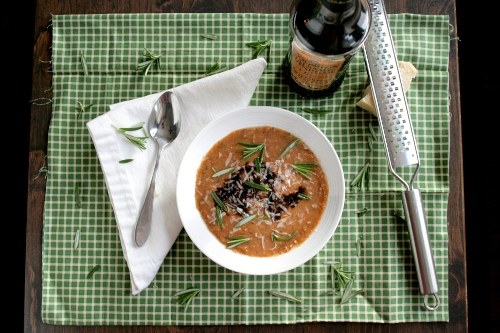
    Although the ingredient list looks long, they’re mostly basic ingredients that you probably have around (or am I the only one who has a cupboard filled with cans and cans of different varieties of beans?). And if you happen to have a different set of beans in your cupboard, feel free to adapt and use whichever beans you like best (although if you’re looking at a whole lot of black beans, I think you’ll be better off with my chipotle black bean soup). The flavoring in this soup is fairly traditional: mirepoix (onion, carrots, and celery), garlic, thyme, rosemary, and balsamic vinegar to finish it off. You’re going to want a really large pot to hold all of this soup. Great if you’re trying to feed a hungry family (with all the beans in there plus the kale, it’s sure to fill everyone up) or just want to have enough leftovers for a week or two.

    (more…)

    Related Posts:

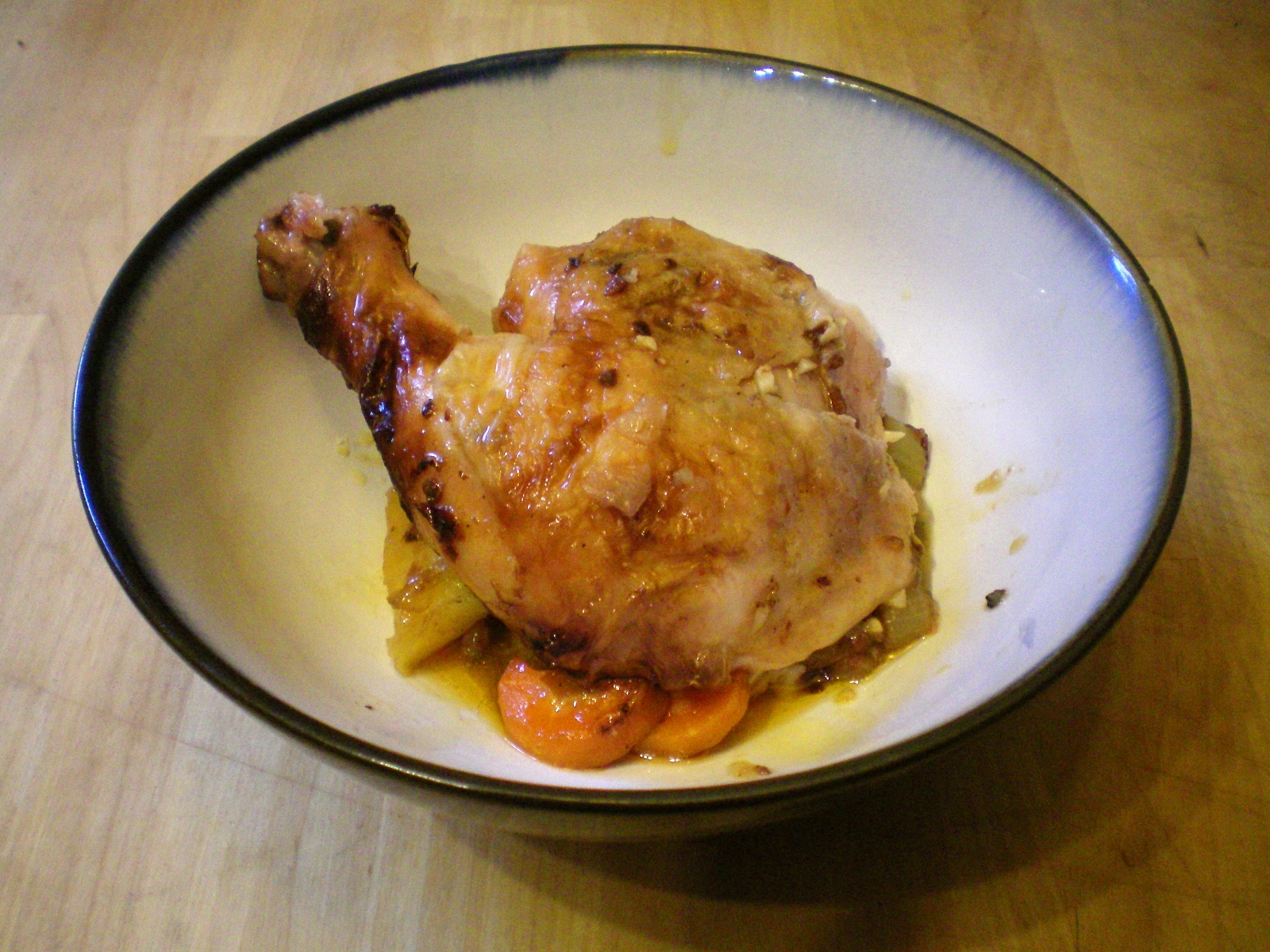
  • The Perfect Roast Chicken

    The Perfect Roast Chicken

    Roasting a chicken is a culinary feat I used to think was reserved for better chefs than I. But this recipe easily yields a perfectly cooked, succulent chicken and is actually much simpler than many other dishes I take on. There are a couple tricks that make this recipe a cut above the rest – brining the chicken is the main key to its juiciness, and cooking at a high oven temperature turns the skin a fabulous crispy golden brown. This is also a recipe with a lot of downtime, so you have the opportunity to take care of some of those chores you’ve been putting off while the chicken is brining, in the oven, or resting.

    (more…)

    Related Posts: