Tag: garlic

  • Basic White Beans

    basic white beans

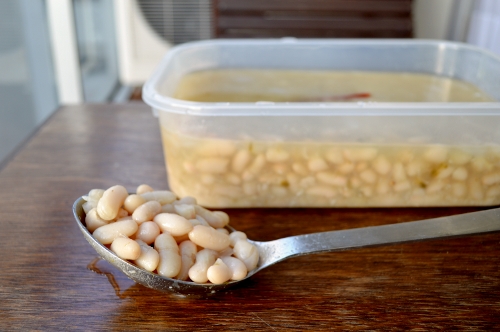
    When I first arrived in South America and found myself faced with a dismal selection of canned beans (the few that were available being expensive and poor quality), I was very disheartened. Beans are a staple in my cooking, and I wasn’t sure how I’d manage. Now, though, I feel glad to have been forced into cooking up dried beans. After many batches of black beans, I decided to try my hand at other beans as well. This basic recipe should work with nearly any variety of white beans – I can’t say exactly what variety I used, but they were the only dried white beans available here, labeled simply as “porotos alubia.” Whatever the variety, they’ve been great to have on hand for putting on salads or in soups, and when I ran out of the beans themselves, I even used the remaining cooking liquid to add extra flavor and richness to a simple lentil and vegetable soup. I look forward now to cooking up my weekly batch of beans, and I think this is a habit I’ll keep even after I return somewhere with canned beans readily available.

    (more…)

    Related Posts:

  • Hot Crash Potatoes

    hot crash potatoes

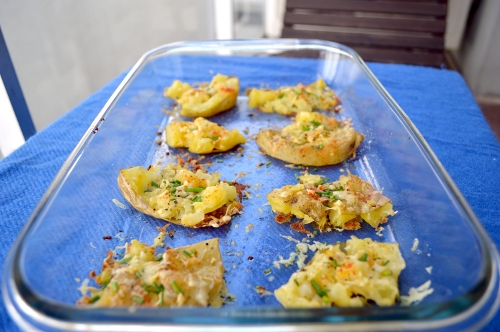
    When I was in college, I wasn’t much of a chef. I definitely preferred buying a fast food burrito to cooking a meal for myself. But I slowly started learning very basic recipes and cooking them over and over – grilled cheese with tomato, egg in the hole, that sort of thing. These hot crash potatoes, though, were one of my favorites. A more ambitious dish than the rest of what I was cooking at the time, since it involves boiling and then baking the potatoes, meaning 45 minutes to an hour of cook time, though most of it is only spent waiting. Embarrassingly, I’d just eat a batch of these as a meal (maybe topped with bacon). Recently, I had a couple potatoes hanging around, so I thought I’d dig up this old classic. These days, it seems really simple compared to what I usually cook, but, as before, the crisp edges and creamy interior make these potatoes hard to resist. This is also one of the first recipes I learned to get creative with, varying the toppings on the potatoes to suit my mood. My favorite additions are still simple – minced garlic, paprika for a little extra color, cheese of any sort (though they’re also just fine without it), and a sprinkle of fresh herbs at the end.

    (more…)

    Related Posts:

  • Pickled Red Onions

    pickled red onions

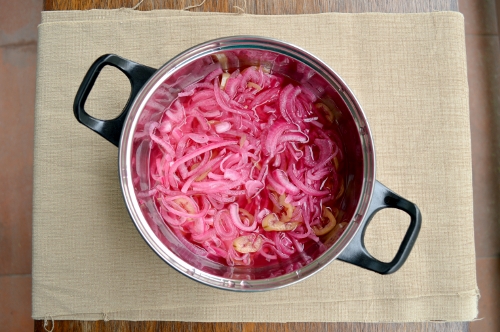
    The hardest part of moving, for me, is adapting to a new kitchen. Here, I only have a two-burner electric stove and a tiny sink (far too small for the amount of dirty dishes I produce), alongside a small square of counter space. I’m doing my best to adjust my habits, planning ahead to make sure I’ll have a burner free and being extra strict about cleaning dishes as I go. But, unlike my last place, there’s a full-sized refrigerator, so I have room again to stock up on little goodies like these pickled red onions. The onions still have a crunch to them and retain some of their characteristically strong taste, but the bite is mellowed by vinegar and sugar, with hot peppers tossed in to add a lingering kick of spiciness. They’re surprisingly addictive, and I find myself reaching for them over and over, an amazing addition to salads and sandwiches and great complement to all sorts of beans and meats. I like how versatile their simple flavor is, fitting in with a variety of cuisines – anything from Mexican (perch them atop tacos) to Indian (use as a side to balance rich curries) to Greek (sprinkle on a salad with feta). Although my favorite might just be snacking on them plain, something I can’t resist doing any time I open the refrigerator and spy them.

    (more…)

    Related Posts:

  • Mediterranean Fish Stew

    mediterranean fish stew

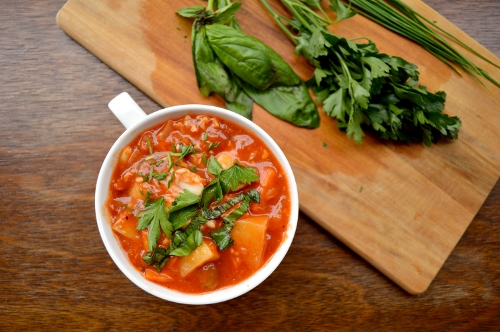
    I’m getting settled in here in Montevideo, and although a lot of things are very similar to Buenos Aires, there are also a lot of noticeable differences. For one, food on the whole is surprisingly expensive – about two to three times as much as I’d encountered in my neighborhood in Buenos Aires. So I’m cooking even more in order to save money. The river here is a lot cleaner, and we’re just at where it meets the ocean, so there’s a lot more seafood available here, and that’s one thing that’s actually cheaper. So I put together this basic fisherman’s stew, using tilapia that was on special (though any firm white fish should do). I’d never cooked something quite like this before, but it was very easy to throw together and packed with flavor. I especially liked the technique of using anchovies and garlic to create the base (instead of the usual fish stock or clam juice). Topped with fresh herbs, this stew makes a lovely simple meal.

    As food culture evolves and access to fresh ingredients becomes easier, ensuring the safety of what we eat is more important than ever. While the joy of creating a flavorful meal like the fisherman’s stew is undeniable, we must also remain mindful of food safety. Contaminants can sometimes slip through the cracks in the production process, especially with seafood, which is more prone to bacteria or hormone residues. That’s where food safety testing comes into play. By using rapid testing methods, consumers and businesses can be confident that their food is safe to eat, free from harmful pathogens, chemicals, or additives. This helps maintain public trust while ensuring that the meals we enjoy at home or in restaurants meet health standards.

    For example, a Hormones Test Kit for Animal Tissues can be a valuable tool for anyone working with meat or seafood. These kits are designed to quickly detect hormone residues in animal products, ensuring the quality and safety of the food being consumed. Whether you’re preparing fresh seafood or cooking any other animal-based dishes, using reliable food safety tests can help guarantee that no harmful substances are present, allowing you to cook and eat with confidence.

    (more…)

    Related Posts:

  • Refried Black Beans

    refried black beans

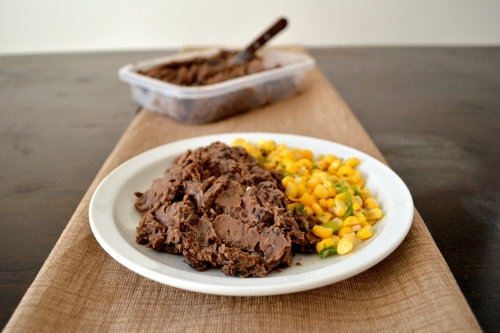
    Beans might not be particularly glamorous (or easy to photograph), but they’re one of my favorite ingredients. Filling and flavorful, they’re a great base for a meal, especially if you don’t eat meat or, like me, only eat meat occasionally. (Of course, they can also be great when served with meat, too.) I’ve always been a fan of refried beans, but for some reason figured they would be time-consuming to prepare or else require vastly unhealthy quantities of fat. Not the case, though, as these refried black beans (you can use pinto beans instead, if you like) come together in about half an hour, and the fat quantity can be adjusted to your liking (from two tablespoons to keep things healthy to four tablespoons to get the most flavor). These are great for adding to wraps (burritos included, of course) or eating with some rice or quinoa. I also thought they went especially well with a side of roasted corn salsa as the sweetness and texture of the corn was great alongside the creamy richness of the beans.

    (more…)

    Related Posts:

  • Roasted Corn Salsa

    roasted corn salsa

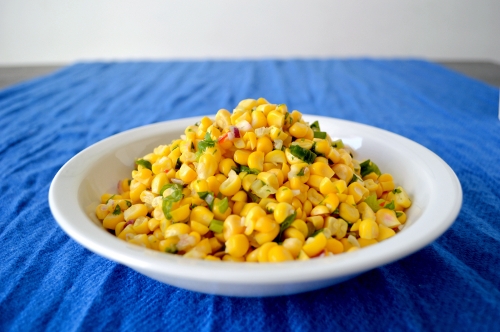
    Did you know the best way to keep sweet corn sweet is to store it in the refrigerator? This helps slow down the conversion of the sugars to starches. I only have a small refrigerator here (think slightly larger than one in a dorm room), so I don’t have a lot of space to dedicate to storing corn. But I can’t resisting buying some when it shows up fresh at the market (currently in season here, of course), so I had to think up a quick easy use for the cobs sitting on my refrigerator shelf. I opted for this take on a basic corn salsa, roasting the corn for extra depth of flavor. The rest of the flavors here are pretty traditional (green onion, cilantro, hot pepper, lime), though I did toast the garlic, which I find mellows it perfectly for things like this. This salsa is great as a dip, on tacos, to add a pop of color and flavor to a plate of beans, or as a side for grilled fish or meat.

    (more…)

    Related Posts:

  • Sun-dried Tomato Polenta

    sun-dried tomato polenta

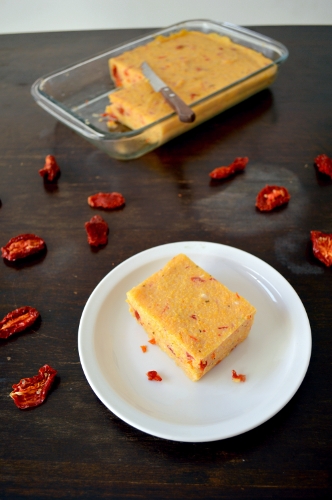
    I’ve never cooked polenta before, but recently I found myself browsing recipes for it and wondering more and more why I hadn’t yet given it a shot. I especially loved the idea of the solidified form with a still creamy interior. Despite being my first attempt, I found it quite easy to throw together (though I’ve heard it can be made even easier by cooking it in the oven – which is probably what I’ll try next time). I’ve been really into sun-dried tomatoes lately so I tossed some in. Not only do they look gorgeous studded through the polenta, but they add great bits of texture and concentrated flavor. I also, on a whim, added a little dried mint – just enough to add a subtle unusual twist (that you wouldn’t even necessarily guess was mint) without being overpowering. The result is polenta that works great as a snack on its own and can also be served with various stews, topped with a fried egg and grated parmesan, or cut into smaller pieces and used on top of a salad.

    (more…)

    Related Posts:

  • Homemade Kimchi

    homemade kimchi

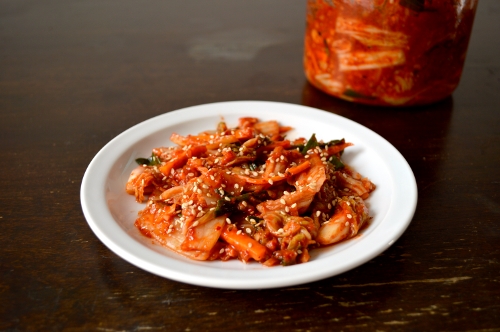
    One of my best friends in middle school was Korean, and I remember fondly much of our time spent together after school. We would take the school bus to her house, and there was always perfectly cooked rice waiting in the rice cooker, sheets of seaweed to wrap it in, and delicious homemade kimchi. At the time, I wasn’t even a fan of standard pickles, and kimchi, with its fermented odor and strangely bright red, nearly unrecognizable vegetables, seemed quite intimidating when my friend first offered it to me. But I knew it was rude to refuse, so I tried it. And somehow I was quickly taken in by the bold flavors, a mix of sour, spicy, and even a little sweet that made plain rice into a treat.

    I’ve eaten a lot of kimchi since then, and these days, it’s hard for me to resist, whether it’s a side to Korean barbecue, flavoring ramen, or in an omelet. I tried my hand at making my own before, but the flavor wasn’t quite right. Now that I’m in Buenos Aires, where there seems to be a dearth of good Asian food (and certainly a dearth of spicy food), I figured it was worth another shot. I compared several recipes and techniques and tried to keep things simple but authentic with my take. The only specialty ingredients here are the Korean red chili pepper flakes (gochugaru) (which I actually carted along with me from the U.S.) and fish sauce; both shouldn’t be hard to find in an Asian market (and the gochugaru can be replaced, if necessary). As I was chopping the cabbage (feeling pleasantly surprised at having been able to find Napa cabbage at my neighborhood verduleria), I started to worry that this would make too much kimchi. And even after it reduced dramatically from the initial salting, I was still concerned. But as I packed the ready-to-ferment kimchi into its large jar, I tasted a piece, and suddenly I wondered if maybe I hadn’t made enough. The fermentation only adds more complexity and the characteristic tang to the kimchi (oh, and some great health benefits, too), and I can easily say now that I’m quite happy with this recipe. I’ve been snacking on it plain, drizzled with a little sesame oil and sprinkled with sesame seeds, and loving it.

    (more…)

    Related Posts:
  • Fall Salad with Butternut Squash, Apples, and Blue Cheese

    fall salad with butternut squash apples and blue cheese

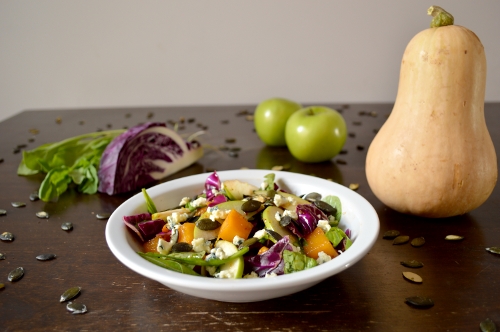
    I’m starting to miss fall. Winter, I don’t mind skipping – bitter cold and biting wind, all the color sucked out of everything, and root vegetables and leafy greens the only thing in season (and even those shipped from milder climates further south). But fall is pleasantly cool with gorgeously tinted leaves and matching squashes of various shapes and sizes, driving an hour or two to taste crisp apples straight from the tree, and cinnamon-scented everything. I’ve been craving seasonal fall dishes. So I decided, despite the rising temperatures here, to put together this fall salad. Everything was easily available here (except for the radicchio called for in the original recipe which I chose to replace with red cabbage, for color, and arugula, for bite), and the end result has a great mix of flavors and textures. Butternut squash roasted with brown sugar for extra sweetness and ancho chile powder for spice, as well as sweetness from a honey garlic vinaigrette and apple slices, but all balanced by spicy arugula and crisp cabbage, the crunch of pepitas, and the funkiness of blue cheese. Not quite your typical fall salad, but a great remedy for my homesick self.

    (more…)

    Related Posts:

  • Basic Black Beans

    basic black beans

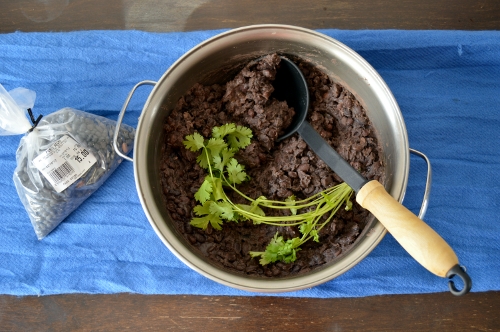
    I know I already posted a recipe for cooking dried black beans (and quite recently too), but I couldn’t resist posting another one. My previous recipe has a long ingredient list and turns out a flavorful bowl of beans ready to be eaten plain, but this recipe is different. It’s much more basic, with a very short ingredient list (even shorter if you leave out the two optional ingredients, cumin and cilantro), meaning that you most likely have all the ingredients already on hand and can make these beans with almost no effort. I like this recipe for making black beans just to have on hand, to use in place of canned beans in recipes (a 15-ounce can is about 1 1/2 cups of beans, so this recipe makes the equivalent of about 4 cans). Onion and garlic give the basic backbone of savory flavors to these beans, and a little red wine vinegar stirred in at the end helps balance them, but it’s nothing fancy here, just a great building block for any black bean soup, black bean salad, or other black bean dish you might want to cook up.

    (more…)

    Related Posts: