Tag: carrots

  • Mediterranean Fish Stew

    mediterranean fish stew

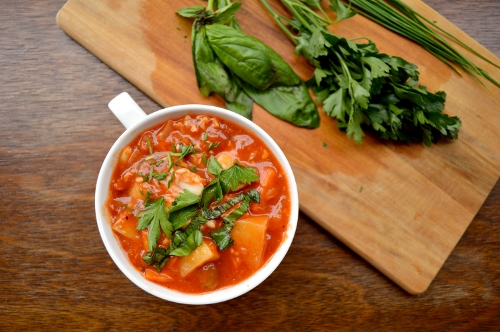
    I’m getting settled in here in Montevideo, and although a lot of things are very similar to Buenos Aires, there are also a lot of noticeable differences. For one, food on the whole is surprisingly expensive – about two to three times as much as I’d encountered in my neighborhood in Buenos Aires. So I’m cooking even more in order to save money. The river here is a lot cleaner, and we’re just at where it meets the ocean, so there’s a lot more seafood available here, and that’s one thing that’s actually cheaper. So I put together this basic fisherman’s stew, using tilapia that was on special (though any firm white fish should do). I’d never cooked something quite like this before, but it was very easy to throw together and packed with flavor. I especially liked the technique of using anchovies and garlic to create the base (instead of the usual fish stock or clam juice). Topped with fresh herbs, this stew makes a lovely simple meal.

    As food culture evolves and access to fresh ingredients becomes easier, ensuring the safety of what we eat is more important than ever. While the joy of creating a flavorful meal like the fisherman’s stew is undeniable, we must also remain mindful of food safety. Contaminants can sometimes slip through the cracks in the production process, especially with seafood, which is more prone to bacteria or hormone residues. That’s where food safety testing comes into play. By using rapid testing methods, consumers and businesses can be confident that their food is safe to eat, free from harmful pathogens, chemicals, or additives. This helps maintain public trust while ensuring that the meals we enjoy at home or in restaurants meet health standards.

    For example, a Hormones Test Kit for Animal Tissues can be a valuable tool for anyone working with meat or seafood. These kits are designed to quickly detect hormone residues in animal products, ensuring the quality and safety of the food being consumed. Whether you’re preparing fresh seafood or cooking any other animal-based dishes, using reliable food safety tests can help guarantee that no harmful substances are present, allowing you to cook and eat with confidence.
    (more…)

    Related Posts:

  • Homemade Kimchi

    homemade kimchi

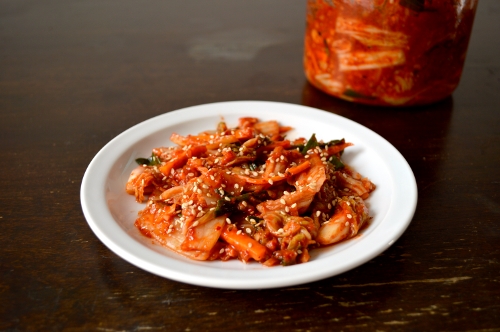
    One of my best friends in middle school was Korean, and I remember fondly much of our time spent together after school. We would take the school bus to her house, and there was always perfectly cooked rice waiting in the rice cooker, sheets of seaweed to wrap it in, and delicious homemade kimchi. At the time, I wasn’t even a fan of standard pickles, and kimchi, with its fermented odor and strangely bright red, nearly unrecognizable vegetables, seemed quite intimidating when my friend first offered it to me. But I knew it was rude to refuse, so I tried it. And somehow I was quickly taken in by the bold flavors, a mix of sour, spicy, and even a little sweet that made plain rice into a treat.

    I’ve eaten a lot of kimchi since then, and these days, it’s hard for me to resist, whether it’s a side to Korean barbecue, flavoring ramen, or in an omelet. I tried my hand at making my own before, but the flavor wasn’t quite right. Now that I’m in Buenos Aires, where there seems to be a dearth of good Asian food (and certainly a dearth of spicy food), I figured it was worth another shot. I compared several recipes and techniques and tried to keep things simple but authentic with my take. The only specialty ingredients here are the Korean red chili pepper flakes (gochugaru) (which I actually carted along with me from the U.S.) and fish sauce; both shouldn’t be hard to find in an Asian market (and the gochugaru can be replaced, if necessary). As I was chopping the cabbage (feeling pleasantly surprised at having been able to find Napa cabbage at my neighborhood verduleria), I started to worry that this would make too much kimchi. And even after it reduced dramatically from the initial salting, I was still concerned. But as I packed the ready-to-ferment kimchi into its large jar, I tasted a piece, and suddenly I wondered if maybe I hadn’t made enough. The fermentation only adds more complexity and the characteristic tang to the kimchi (oh, and some great health benefits, too), and I can easily say now that I’m quite happy with this recipe. I’ve been snacking on it plain, drizzled with a little sesame oil and sprinkled with sesame seeds, and loving it.

    (more…)

    Related Posts:

  • Mushroom Bourguignon

    mushroom bourguignon

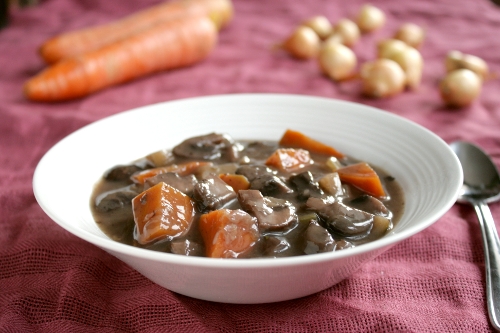
    I think mushrooms are one of those ingredients that can be pretty polarizing. Some people love mushrooms, and others can’t stand them. Personally, I’m a big mushroom fan – they’re just packed with umami! For any other fungi aficionados out there, here’s a great recipe that showcases the meaty, earthy flavor of mushrooms as the main star of a French-inspired stew. As I’m not a vegetarian, I used bacon fat and beef stock to add extra meatiness, but you’ll be just fine with olive oil and mushroom or vegetable stock. I found this bourguignon very satisfying on a rainy day, and it’s sure to make for great comfort food for other mushroom lovers out there.

    (more…)

    Related Posts:

  • Roasted Pepper and Mushroom Paprikash

    roasted pepper and mushroom paprikash

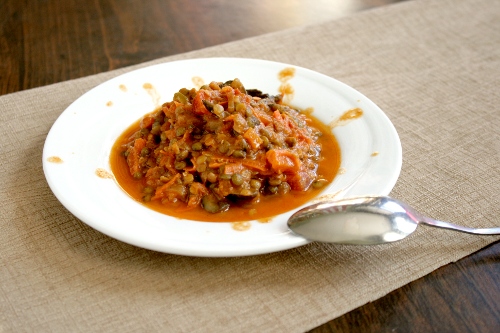
    Paprikash is a Hungarian stew, usually made with chicken, where the spicing comes entirely from paprika. As a paprika lover, this stew is naturally a favorite of mine. I’ve made a more traditional version using chicken before, but was recently inspired to try out this vegetarian version. The sweetness of roasted peppers and earthiness of cremini mushrooms is a great match with the paprika (I think I’m going to start adding both to my chicken paprikash!), and I tossed in some lentils to make it a little heartier.

    (more…)

    Related Posts: